

I signed my divorce papers in a coffee shop because I couldn’t find a pen at home.
I wish that were a dramatic opening I made up later. It wasn’t.
I had drawers full of things. A junk basket. A purse with receipts from three months ago, lip balm, old grocery lists, and random wrappers. But not one working pen. So I drove to the coffee shop near my house, borrowed a cheap blue pen from the barista, ordered a latte I barely touched, and signed the papers that ended my fifteen-year marriage.
The pen didn’t cause the divorce. But it felt like the whole marriage sitting there on the table.
One small basic thing that should have been easy, somehow made hard. Again.
I was 46. I would not find out I had ADHD for another year.
Quick answer
Can undiagnosed ADHD damage a marriage?
Yes, for some couples it can. Undiagnosed ADHD often shows up as forgotten commitments, an uneven mental load, emotional reactivity, and a partner who feels unheard. None of that is a character flaw, and none of it means the relationship was doomed. But without a name for what is happening, the pattern can quietly wear a marriage down. A diagnosis does not undo the damage, but it can finally explain it.
Key takeaways
- Undiagnosed ADHD in adults often gets mislabeled as careless, lazy, or “not trying” — by everyone, including yourself.
- In relationships, ADHD can quietly create an unfair mental load, broken promises, and a partner who feels like a parent.
- Late diagnosis can bring relief and grief at the same time. Both are normal.
- A diagnosis explains the pattern. It does not excuse the pain it caused — but it gives you a starting point.
- The systems that actually helped were small, boring, and built around less friction, not more willpower.
In this article
- 01I Signed the Divorce Papers With a Borrowed Pen
- 02The Years I Thought I Was Just Bad at Being a Person
- 03How Undiagnosed ADHD Actually Broke Us
- 04The Divorce, and the Part I Don’t Talk About
- 05The Day It Got a Name
- 06What I Refused to Lose Next
- 07What Life Actually Looks Like Now
- 08FAQ: ADHD and Relationships
I Signed the Divorce Papers With a Borrowed Pen
That was the pattern. Not one huge betrayal. Not one awful night where everything exploded. It was years of tiny things that slowly made my husband tired of trusting me.
This is the story I don’t usually tell out loud. I’m telling it because I know I’m not the only one who lived it — and because the ending is better than the middle.
The Years I Thought I Was Just Bad at Being a Person
Before the marriage fell apart, there were the jobs. I was let go from four of them. Different cities, different roles, same ending — “so creative,” “so well-liked,” and then, two sentences later, “but we need someone more reliable.”
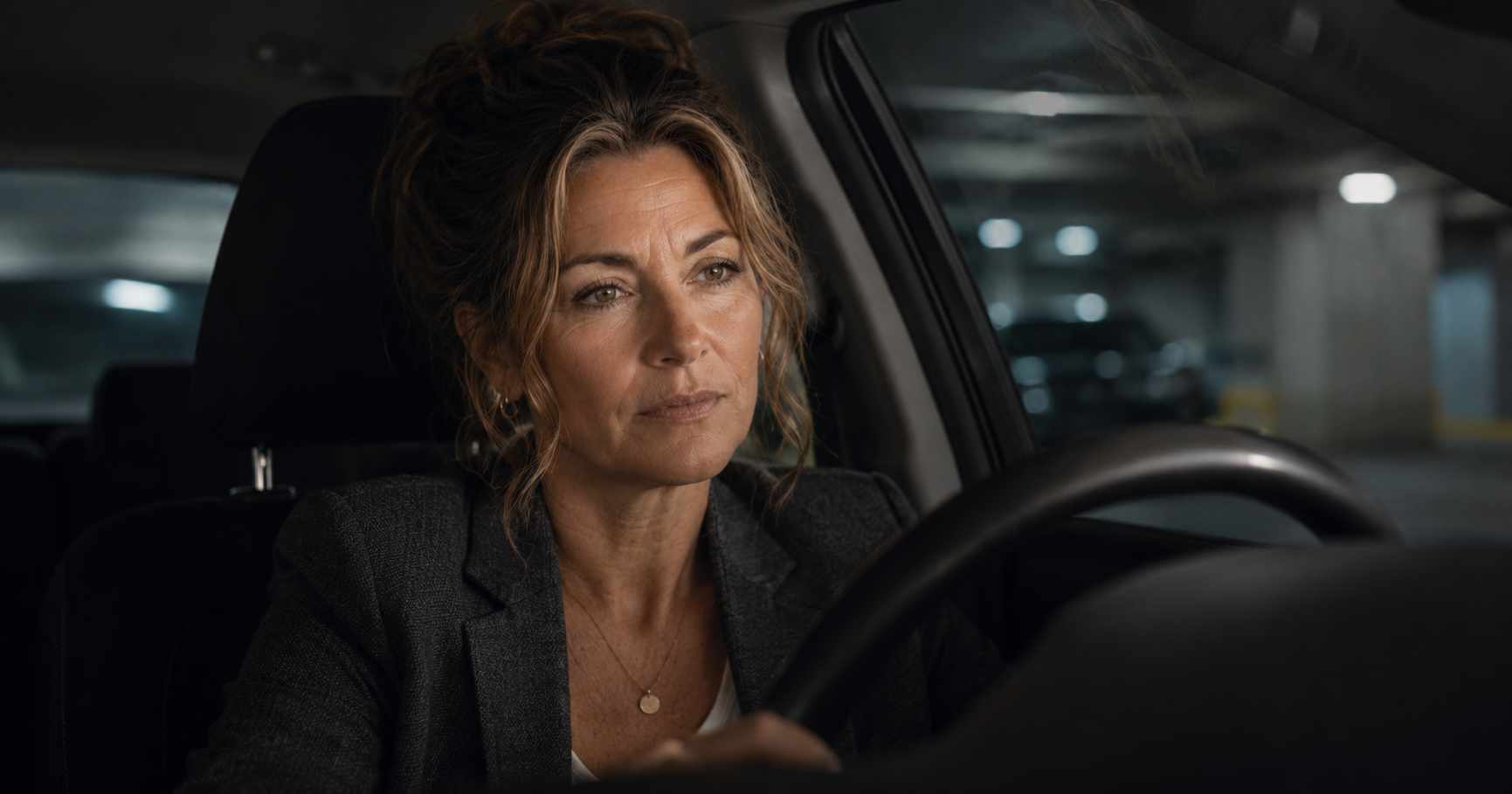
There was the job where I missed a client deadline because I’d written it in the wrong week of my planner — a planner I’d bought specifically because I kept missing deadlines. I sat in my car in the parking garage afterward, not crying, just blank, thinking: what is wrong with me that I cannot do the one basic thing.
I wasn’t lazy. I worked harder than almost anyone I knew. From the outside it looked like I didn’t care. The truth was the opposite. I cared so much it shut me down.
If you want the everyday version of this, I wrote about the small things women with ADHD live with every day.
How Undiagnosed ADHD Actually Broke Us
I forgot the car registration. Not for a day. Not for a week. For months.
The renewal notice sat in a pile of papers on the kitchen counter, then got moved to the entry table, then somehow ended up under a school folder. I kept saying, “I’ll do it tomorrow.” And I meant it. I really did. Then tomorrow became next week.
Then he got pulled over with our daughter in the back seat. I remember his face when he came home. He wasn’t yelling — that would have almost been easier. He just looked done.
I forgot school forms. Picture forms. Permission slips. Things other parents seemed to just sign, put in a backpack, and move on from. I would see the paper, put it somewhere “safe,” then forget that place existed.
There are years where my daughter doesn’t have the school photo everyone else has. That one still hurts.
It wasn’t because I didn’t care. That’s the part that still makes me angry, even now. I cared so much I would lie awake thinking about what I had forgotten. I bought planners. I downloaded apps. I made calendars. I color-coded things. I wrote “new system starts Monday” so many times it almost became a joke.
But the systems never lasted, because they were built for a version of me who didn’t exist.

At home, that meant my husband slowly became the backup brain for both of us. He remembered the bills. He checked the dates. He asked if I had called the dentist. He asked if I had picked up the one thing from the store — the only thing — and half the time I hadn’t.
Every time he asked, I felt accused. Every time I forgot, he felt abandoned. That is a terrible loop to live inside.
After a while, we weren’t talking about the thing anymore. We were talking about the pattern underneath it. The milk wasn’t just milk. The unopened mail wasn’t just mail. It became proof. Proof that he couldn’t rely on me. Proof that I was trying and failing.
From my side, I was exhausted from trying. From his side, I was exhausting to live with. Both were true.
There can be love in the house and still be real damage. There can be effort and still be broken trust.
I loved him. I loved our daughter. I wanted to be the kind of woman who remembered things, followed through, stayed calm, and didn’t turn a normal Tuesday into a crisis. But wanting it didn’t make my brain do it.
I was also emotionally messy in ways I didn’t understand back then. If he criticized me, even gently, I heard it as proof that I was failing as a person. I’d get defensive fast. Sometimes I’d shut down. Sometimes I’d cry. Sometimes I’d turn a small conversation into a huge one because the shame hit before the words did.
So he stopped bringing things up until he was already angry. And I stopped hearing him until he was already gone.
There was one sentence he said that stayed with me. He said it quietly. No drama. No shouting. Just tired.
“I feel like I have two kids.”
I hated him for saying it. And I hated myself, because I understood why he felt that way.
The Divorce, and the Part I Don’t Talk About
That is not the whole story of our marriage. He wasn’t perfect. I wasn’t the only person who hurt anyone. Divorce is never that clean.
But this part was mine. The missed deadlines. The forgotten paperwork. The emotional blowups. The piles. The shame. The promises I meant and still broke.
We split when our daughter was nine. She lives with me most of the time now. That part healed in ways I didn’t expect.
But there were nights, early on, when she was asleep down the hall and I sat on the bathroom floor — actual floor, back against the tub — trying to figure out how I had become the person who broke her own life.
If you’re in that place right now, reading this on a bathroom floor of your own: you are not the villain in your own story. You were a person doing your best with a brain nobody had bothered to explain to you.
The Day It Got a Name
I was 47 when a psychiatrist finally said the word. ADHD.
I had gone in thinking maybe it was anxiety. Or burnout. Or maybe I was just bad at being alive in a way no one had found a polite name for yet.
She asked questions that felt weirdly personal. Do you lose things constantly? Do you interrupt people without meaning to? Do you avoid tasks until they become emergencies? Can you focus for hours on something interesting but not ten minutes on something important? Do you have a long history of being told you’re smart but inconsistent?
Yes. Yes. Yes. All of it.
When she said ADHD, I didn’t feel fixed. I felt devastated. Because suddenly my life made sense, but too late to save some of it. Too late for the marriage. Too late for the jobs I had already lost.
A diagnosis doesn’t erase what happened. It didn’t make my ex-husband less tired. It didn’t give my daughter back the school pictures I forgot to order. But it did change one thing.
For the first time, shame was not the only explanation.
What I Refused to Lose Next
I couldn’t get my marriage back. But I had a daughter, a few good friends, and a fragile new sense of why my brain worked the way it did — and I decided I was not going to lose those too. Not to chaos. Not again.
So I started building. Slowly. Badly at first. The thing nobody tells you is that the systems that work for ADHD are almost embarrassingly small. They are not impressive. They just quietly stop the same disasters from happening.
- One home for every important thing. Keys, wallet, and the one folder of adult paperwork live in exactly one spot by the door. Not “wherever I set them down.” One spot.
- Auto-pay on everything that will let me. My ADHD will never reliably remember a due date, so I removed the requirement to remember. The car-registration disaster has not happened again because I made it impossible.
- The two-minute capture rule. When my daughter mentions a form or a date, it goes into my phone while she is still talking, not later when I will “remember.” Later is a lie my brain tells me.
- Energy-based days, not perfect days. Some days I have it; most days I have about 60 percent. I plan for the 60. This is the whole reason low-energy days stopped flattening me.
- A weekly ten-minute reset. Not a deep clean. Ten minutes where I catch the things that pile up into avalanches. Catching it small is the entire trick.
None of this required more willpower. That was the revelation. For decades I tried to fix an ADHD brain by pushing harder, and pushing harder is the one thing an ADHD brain is worst at sustaining. It is also exactly why a pretty planner never fixed me. What worked was the opposite: less friction. Fewer things to remember.
| Before I had systems | After I built them |
|---|---|
| Relied on remembering — and remembering failed | Made the important things automatic |
| Planned for the best version of me | Planned for the realistic, 60%-energy version of me |
| Let small things pile into emergencies | Catch small things weekly, before they grow |
| Shame when I dropped the ball | A system that catches the ball for me |

Free Dopamine Menu
24 tiny activities for low-energy days, overwhelm, and task freeze.
Get the Free PDF ↓Free PDF • Sent to your inbox
7 free tiny wins • No credit card • No countdown